
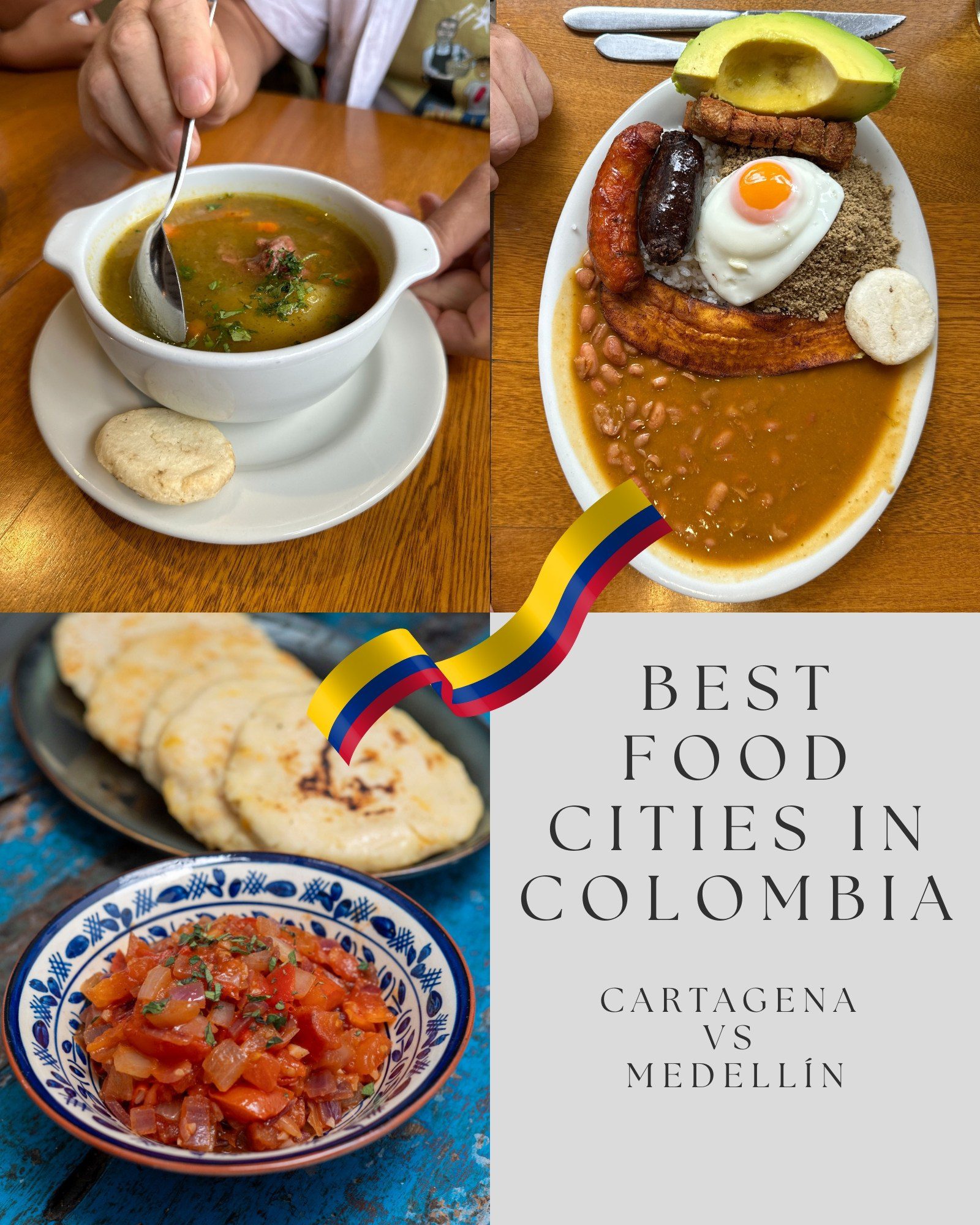
Cartagena or Medellín: Which Colombian Food City Is Right for You?
If you’re planning a trip to Colombia and your stomach is leading the way (as it should), you might find yourself torn between two of the best food cities in Colombia: Cartagena and Medellín. Both have vibrant food cultures, but the flavors, rhythm, and dining scenes are distinctly different. If you’re still wondering why visit Colombia, these two cities alone make a compelling case.
We’ve spent time eating our way through both, and if you’re considering joining us for Let’s Eat Colombia, here’s how these two food-rich cities stack up.
The Flavor Profile
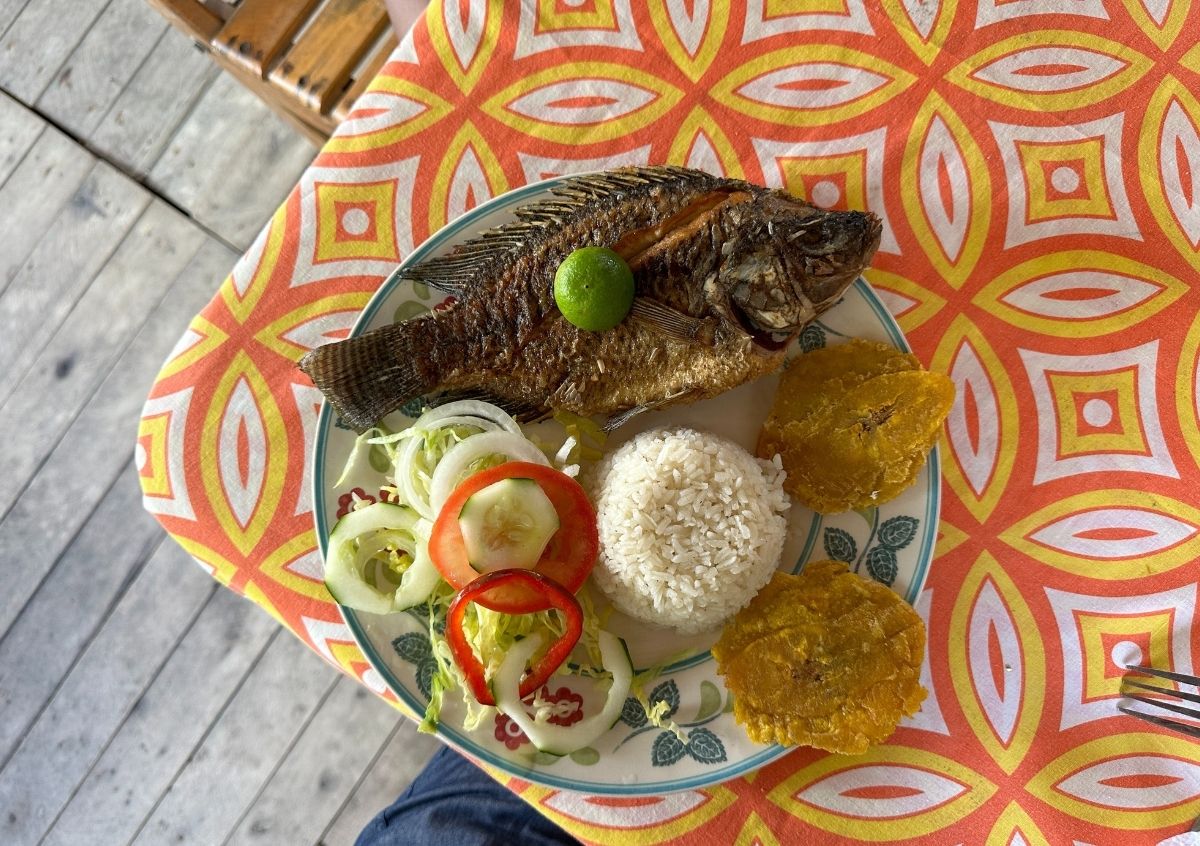
Cartagena: Caribbean influences dominate here. Think coconut rice, fried fish, tropical fruits, all kinds of plantains, and seafood straight from the boat to the grill. Spices are subtle, but the ingredients shine—especially when paired with a tangy salsa or chilled limonada de coco.
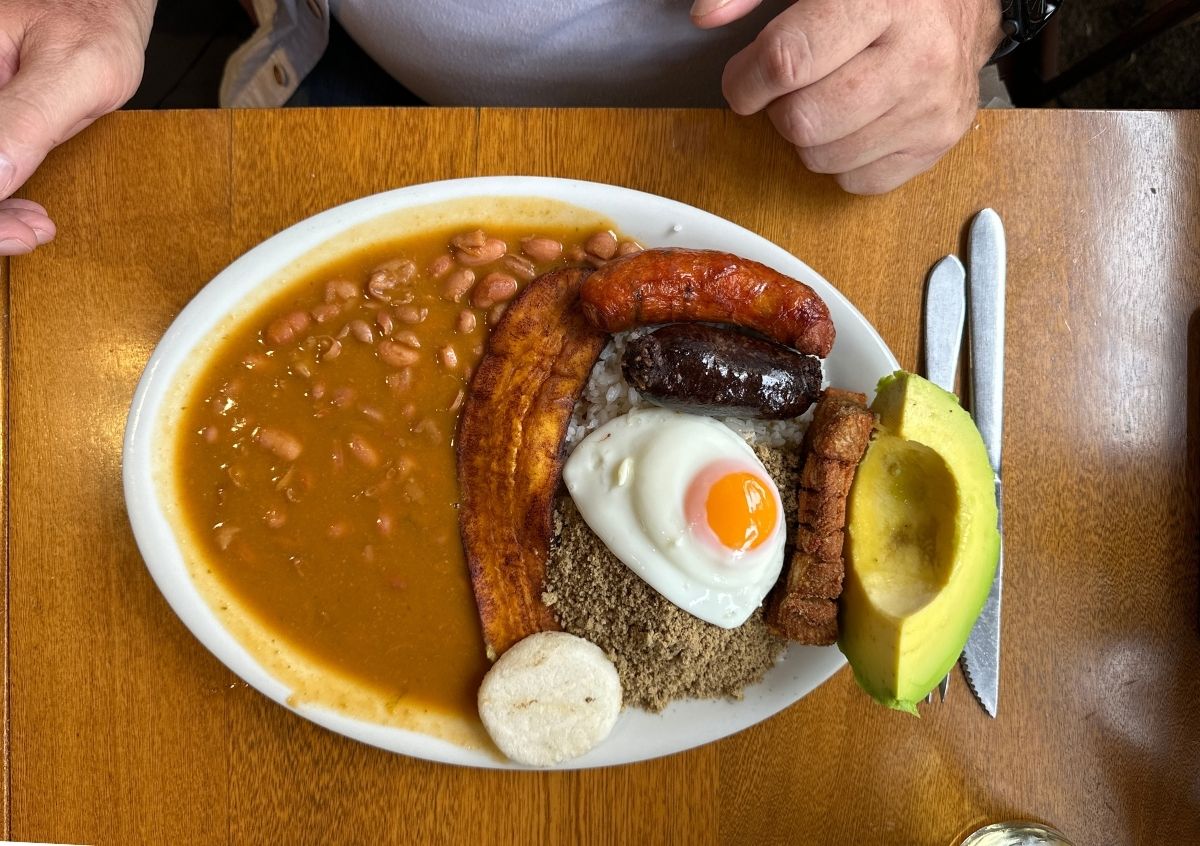
Medellín: You’ll find a heartier, mountain-influenced approach. Beans, pork, corn, and avocado appear often, especially in the city’s signature dish: bandeja paisa—a true reflection of Colombia’s culinary fusion. The base of beans, rice, and corn echoes indigenous food traditions, while pork and chorizo highlight Spanish colonial influence, and fried plantains nod to African culinary roots. Soups and stews are comfort food staples. This is the land of deep plates and big flavors, shaped by centuries of cultural layering.
If you’re curious about the full culinary scope of this beautiful country, What You’ll Actually Eat in Colombia offers a deeper dive into the dishes that surprise even seasoned travelers.
Where to Eat Like a Local
In Cartagena:
-
Bazurto Market – It’s chaotic, colorful, and definitely worth a visit. Come hungry and curious.
-
La Cevichería – For a more refined yet still hyperlocal taste of the coast.
-
Celele – One of Latin America’s 50 Best Restaurants, celebrating native ingredients in modern ways.
In Medellín:
-
Restaurante Hacienda Junín – I had an unforgettable bandeja paisa here, washed down with a perfect limonada de coco.
-
Hatoviejo – A classic for traditional Antioqueño dishes.
-
OCI. Mde or El Cielo – For modern Colombian plates that blend art and tradition.
If you’re planning your meals ahead, our roundup of Where to Eat and Drink in Cartagena and Medellín could save you from decision fatigue.
Market Culture
Cartagena’s Bazurto Market isn’t just a place to shop—it’s a cornerstone of the city’s Afro-Colombian identity. The market is sprawling, messy, loud, and packed with energy. It’s a living, breathing institution that’s served Cartagena’s working-class neighborhoods for generations.
What to Expect at Bazurto
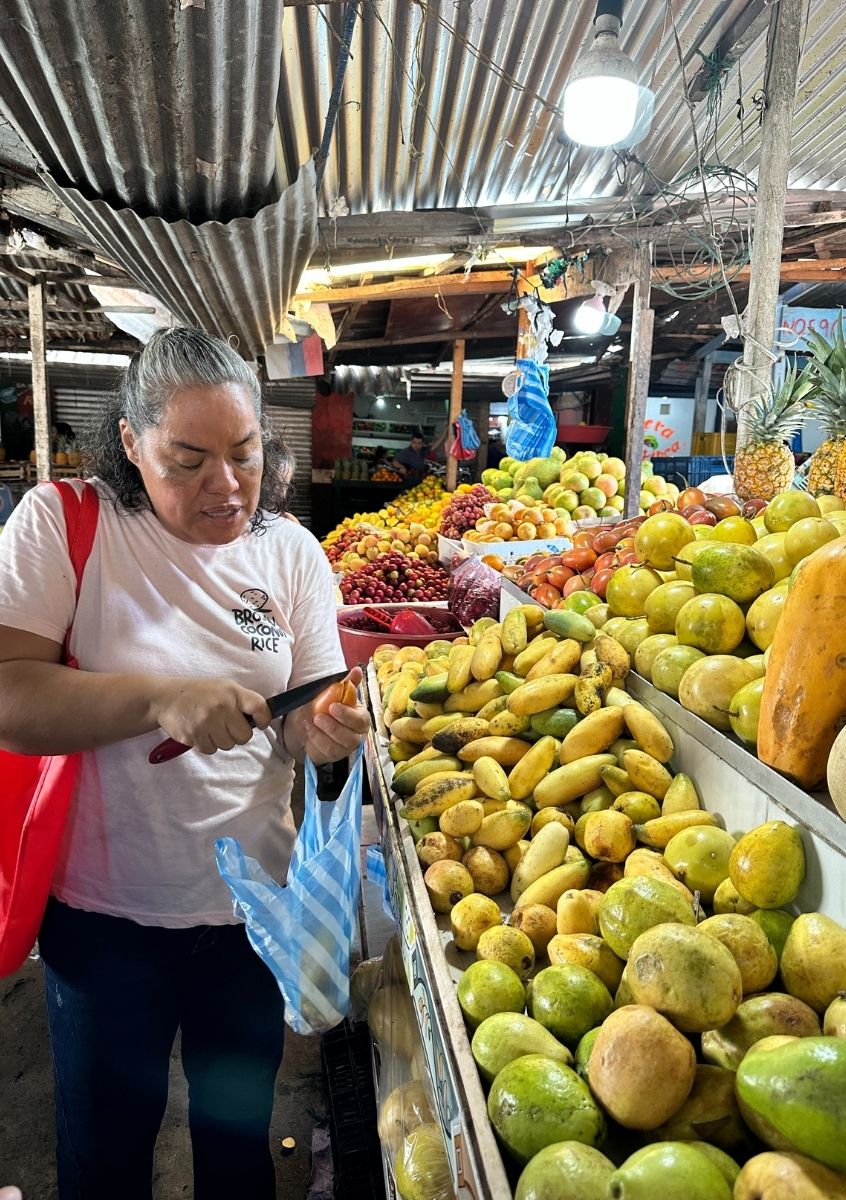
It’s hot. The aisles are narrow. Fans whirr, and vendors shout prices over the noise of salsa and champeta music. You’ll see fish being scaled on crates, vats of stews bubbling over open flames, corn being ground by hand or machine, and heaps of yuca, ñame, and other roots being weighed and wrapped in newspaper.
Ingredients and Identity
Baskets overflow with pineapples, lulo, plantains, and tropical herbs used in Afro-Colombian recipes handed down through generations. Some parts might overwhelm first-timers, but others will find it electrifying. It’s a space where food and cultural heritage coexist, and where the people of Palenque and Cartagena’s Afro-descendant neighborhoods continue to assert their place in the city’s culinary story.
To learn more about the cultural influences involved, Afro-Colombian Heritage and the Flavors That Tell Its Story offers deeper insight.
A Living Cultural Landmark
Efforts to relocate Bazurto—often framed as modernization—have raised concerns among community members. For many locals, this market is more than a place to buy and sell; it’s a cultural and economic hub rooted in Black and Afro-Colombian traditions. It’s where daily rituals, flavors, and stories come together.
Food Meets Identity
To understand Cartagena through food is to understand Bazurto. The people who shop here, cook here, and live nearby give the city its flavor—both literally and figuratively. You come for ingredients, but you leave with a sense of history, resilience, and soul.
Plaza Minorista in Medellín
Medellín’s Plaza Minorista offers a more structured yet equally fascinating look into Colombia’s food economy. Rows of fresh produce, bulk grains, meat vendors, and small food stalls where you can grab an empanada and a juice make it perfect for urban explorers.
Culinary Innovation
Medellín has made great strides over the last decade as a hub for culinary creativity. Its restaurant scene is ambitious, with chefs reinterpreting traditional recipes using modern techniques and local ingredients.
Cartagena maintains a stronger connection to tradition, but restaurants like Celele are helping rewrite that story, one dish at a time.
Overall Vibe
Cartagena feels sunny and spontaneous. Most of its food culture revolves around street food or outdoor dining in breezy open-air spots.
Medellín has a more urban vibe. You’ll find a growing café scene, stylish spaces, and dining rooms that blend fashion with function.
Which One Is Right for You?
-
Pick Cartagena for bright coastal flavors, open-air markets, and warm Caribbean hospitality.
-
Choose Medellín if you prefer bold, comforting foods, modern chefs, and a cooler mountain atmosphere.
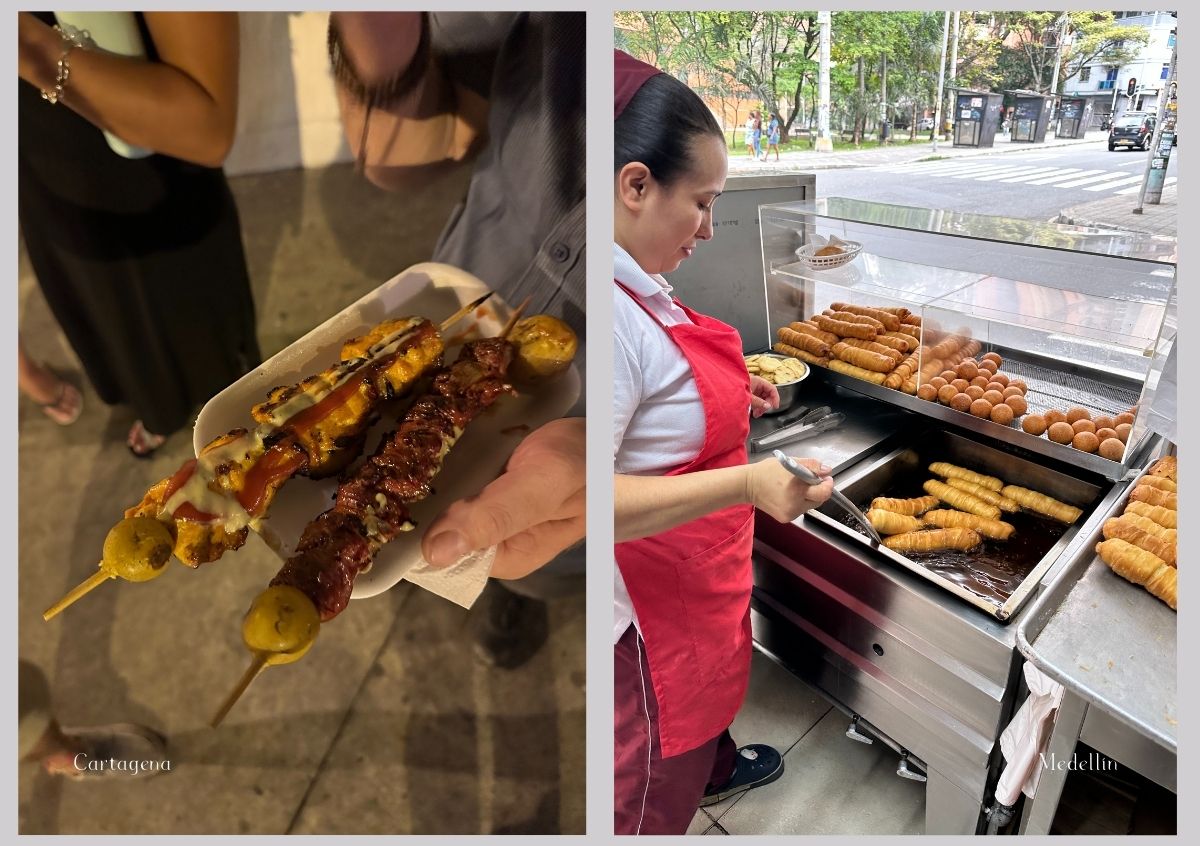
Or do what we do—choose both. Our Let’s Eat Colombia tour takes you from the coast to the Andes, offering a taste of each. One journey, two culinary perspectives, and no need to choose.
Explore our full collection of chef-curated culinary holidays for more flavorful escapes.