
Tacu Tacu
Tacu Tacu and the Art of Peruvian Leftovers
Afro-Peruvian influence, humble ingredients, and home cooking as cultural expression.
How to turn leftovers into wow! The Afro-Peruvian way
Tacu Tacu is one of those dishes that carries the weight of history while still managing to feel fresh, flexible, and comforting. A humble mix of rice and beans, seared into a crisp-edged pancake and often topped with a fried egg or accompanied by plantains, it was born out of resourcefulness — a way to repurpose leftovers into something nourishing and satisfying. But its story, like so many Afro-descendant dishes across the world, is also one of adaptation, survival, and cultural expression.
The origins of the tacu tacu recipe
According to Peru Info, Tacu Tacu emerged during colonial times, when enslaved Africans in coastal Peru combined local ingredients with culinary techniques passed down through generations. What resulted wasn’t just a way to stretch food — it was a new expression of identity.
The origins of its name are debated. Culinary author Aida Tam Fox, in her Vocabulario de la cocina limeña, traces “tacu tacu” to the Quechua word tacuni, meaning “to mix” or “to mash” — an interpretation grounded in how the rice and beans form a unified mass. However, researcher Jorge Yeshayahu offers a different theory, proposing that the name may stem from the Swahili word taka, meaning “food,” pointing to the Afro-Peruvian roots of the dish in the coastal valleys of Chincha and Cañete. As he notes, such expressions were often suppressed during the colonial era, yet elements like “tacu” may have endured through oral tradition.
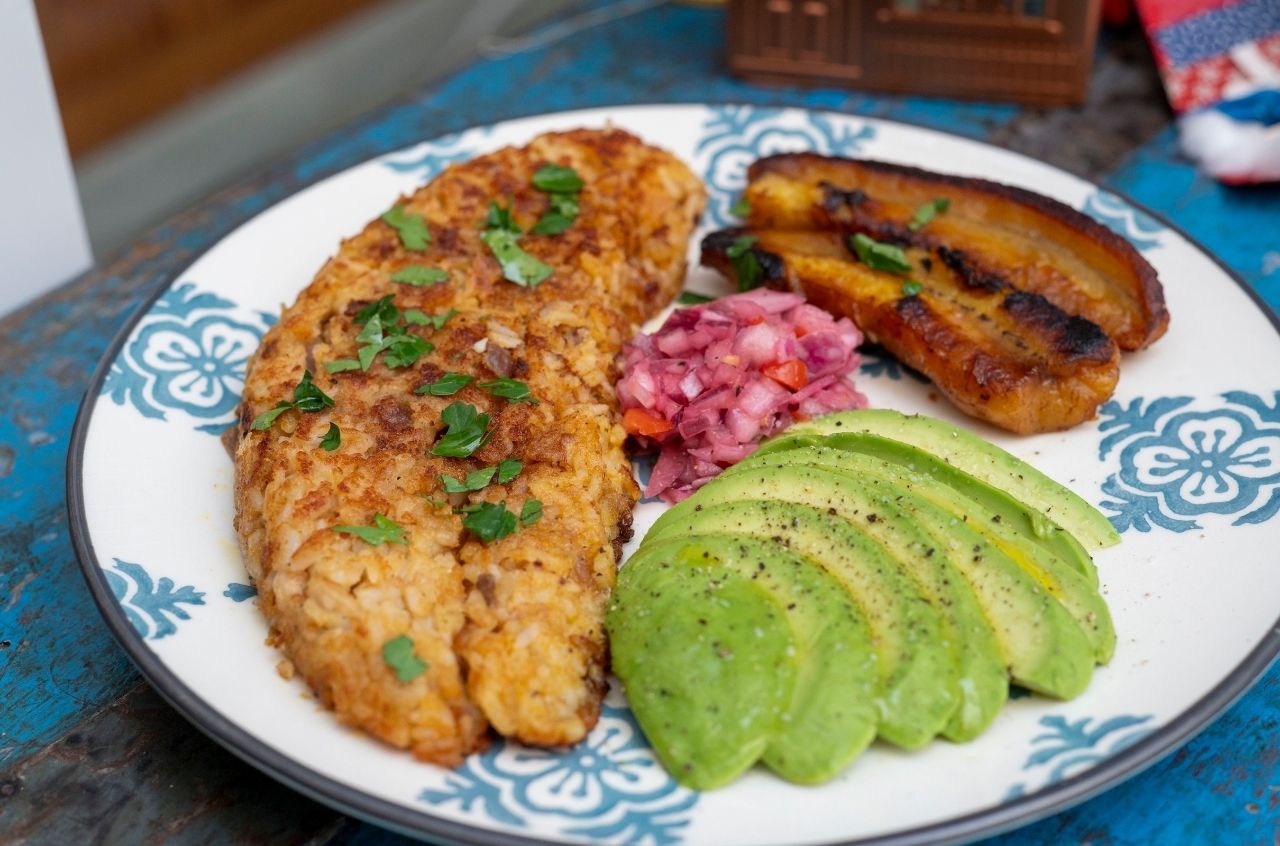
What’s in a name?
Whatever the origin of the name, it is now fundamentally grounded in the criolla cuisine of Peru – yet another cultural mixture that makes this culinary giant a must-visit. There is no argument about its African influence or just how delicious it is.
Try it yourself
Try this recipe at home and tell me if you like it. Tacu Tacu is proof that yesterday’s rice and beans can become the highlight of today’s table — a reminder of how Afro-Peruvian cooks have long turned resourcefulness into brilliance.
On our Let’s Eat Peru culinary vacation, we honor these lineages not just through storytelling, but in the kitchen — by tasting, preparing, and understanding the history behind every dish we encounter.
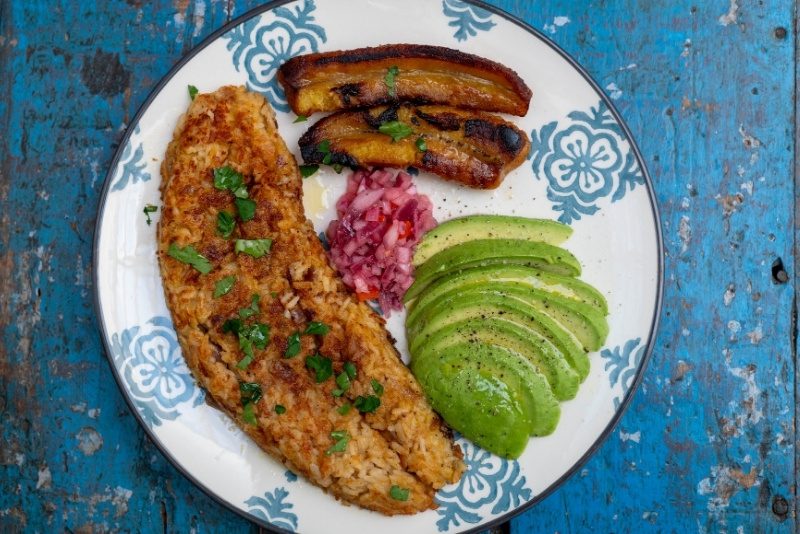
Tacu Tacu (Peruvian Beans and Rice
Ingredients
For the Beans
- 1 Kilogram Canario Beans or substitute with a similar creamy white bean 2.2 lb
- 1 Slice Bacon or smoked rib if available (can be skipped see notes)
- 2 Tablespoons Vegetable or Olive Oil
- ½ Large Red Onion finely chopped
- 2 Garlic Cloves minced or finely grated
- 1½ Liters Water 50.72 floz
- Salt and Pepper to taste
For the Rice
- 1 Teaspoon Olive Oil or any other oil
- 1 Garlic Clove minced or finely grated optional
- ¾ Teaspoon Salt
- 200 Grams White Rice 1 cups
- 300 Milliliters Water 1.5 cups
For the Tacu Tacu
- Vegetable or Olive Oil
- 1 Red Onion finely chopped
- 3 Garlic Cloves minced or finely grated
- 6 Tablespoons Aji Amarillo Paste
- Salt and Pepper to taste
For the Salsa Criolla
- 1 Aji Amarillo Pepper thinly sliced
- 1 Red Onion thinly julienned
- 2 Tablespoons Lime Juice
- 1 Tablespoon Olive Oil
- Salt and Pepper to taste
For Serving
- 3 Tablespoons Butter
- 3 Plantains cut in half & halved lengthwise
Instructions
Salsa Criolla
- Combine aji amarillo, onion, lime juice, olive oil, salt, and pepper. Let marinate for at least 2 hours.
Beans
- Soak the beans overnight or for at least 8 hours in room temperature water. Drain and discard the soaking water.
- Heat a large pot over medium heat. Cook the bacon until browned on both sides, then remove and reserve.
- Add oil to the pot, followed by onions. Sauté until lightly golden, stirring occasionally.
- Add garlic and cook for 1 minute, stirring constantly.
- Return the bacon to the pot, add beans, and water. Bring to a gentle boil, cover, and simmer for 1-1½ hours until beans are soft and creamy. For pressure cooking, cook for 40 minutes at high pressure.
- Drain excess liquid if the beans are too soupy, conserving the cooking water in a separate container. Use this water to adjust consistency later if needed.
- Blend half of the cooked beans until creamy, then return to the pot. Adjust the consistency to be creamy but not soupy or overly thick by adding reserved cooking water as necessary. Season with salt and pepper.
Rice
- Heat a saucepan over medium heat. Add oil, garlic (if using), and salt. Stir until garlic is fragrant but not burned.
- Add rice, stirring constantly for 1 minute to coat the grains.
- Add water, bring to a boil, then cover and lower the heat. Cook for 15 minutes or until water is absorbed. Remove from heat, fluff with a fork, and let sit uncovered for 1 minute.
Tacu Tacu
- Heat a small skillet over medium heat with oil. Sauté onion until slightly golden.
- Stir in garlic and aji amarillo paste; cook for 2 minutes.
- Combine this mixture with the prepared beans and rice. Adjust salt to taste.
- Heat a nonstick skillet over medium-high heat. Add oil, then a large ladle of the bean and rice mixture. Shape into an oval by tilting and shaking the skillet gently. Fry for 3 minutes per side until golden. Repeat for all portions.
Serving
- Fry plantains in butter until golden.
- Serve each tacu tacu with plantains and avocado.
Notes
- People can enjoy the tacu tacu with the protein of their choice. It pairs well with dishes like aji de gallina or aji de camarones.
- For a vegetarian or vegan version, omit the bacon. Sauté the onions and garlic in olive oil, and add a pinch of smoked paprika or a splash of soy sauce to enhance flavor.