
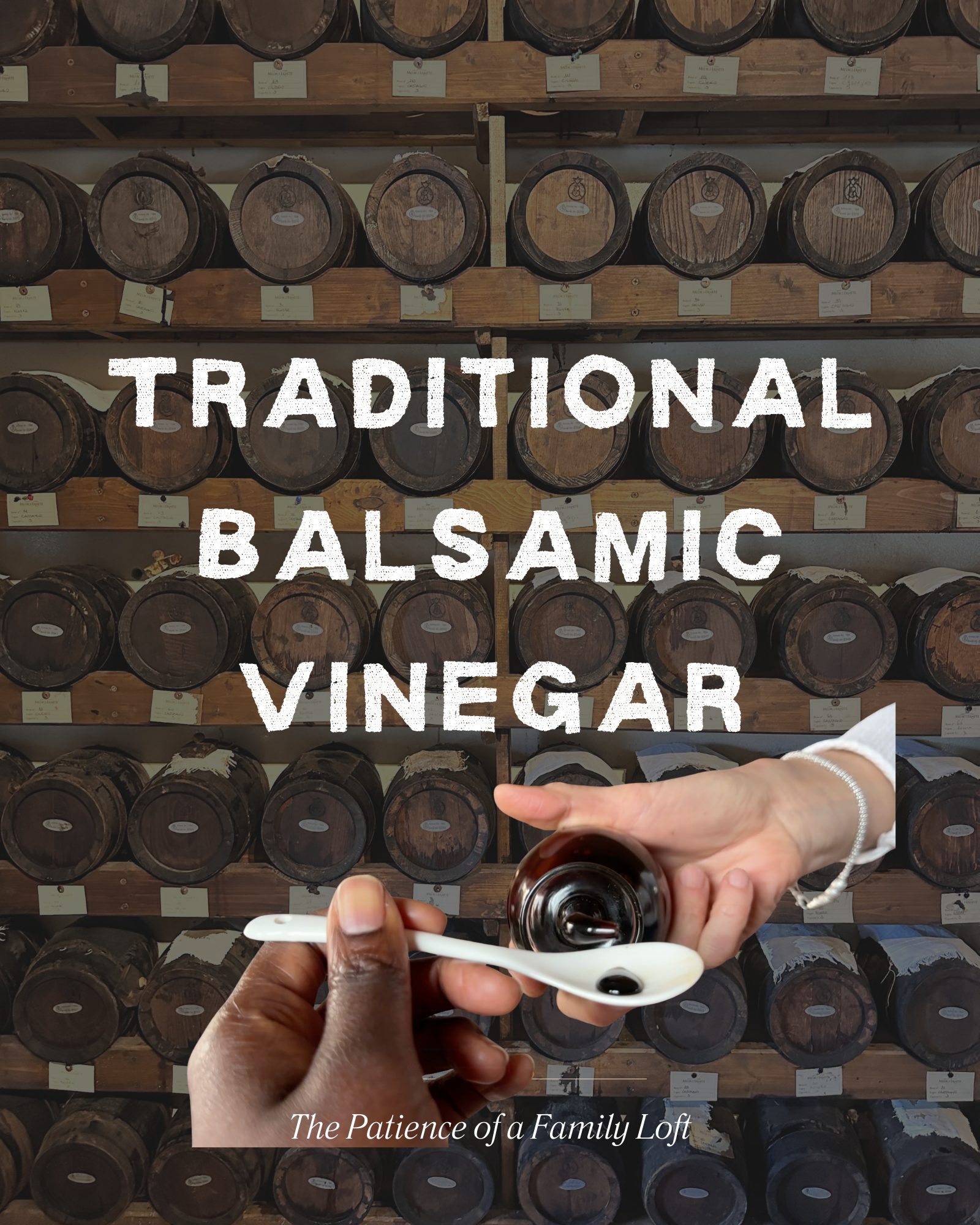
Balsamico Tradizionale: The Patience of a Family Loft
Walk down the aisles of any supermarket and you’ll see bottle after bottle labeled “balsamic vinegar.” But once you’ve stepped into a traditional acetaia in Emilia-Romagna, you’ll never look at those bottles the same way again. In fact, I hate to break it to you, but you are about to become a real Balsamic vinegar snob! Traditional Balsamic Vinegar of Modena and Reggio Emilia (Aceto Balsamico Tradizionale) is a completely different product—one that can only be made in this region, under strict DOP rules, and with a patience that spans decades.
What Makes It “Tradizionale”
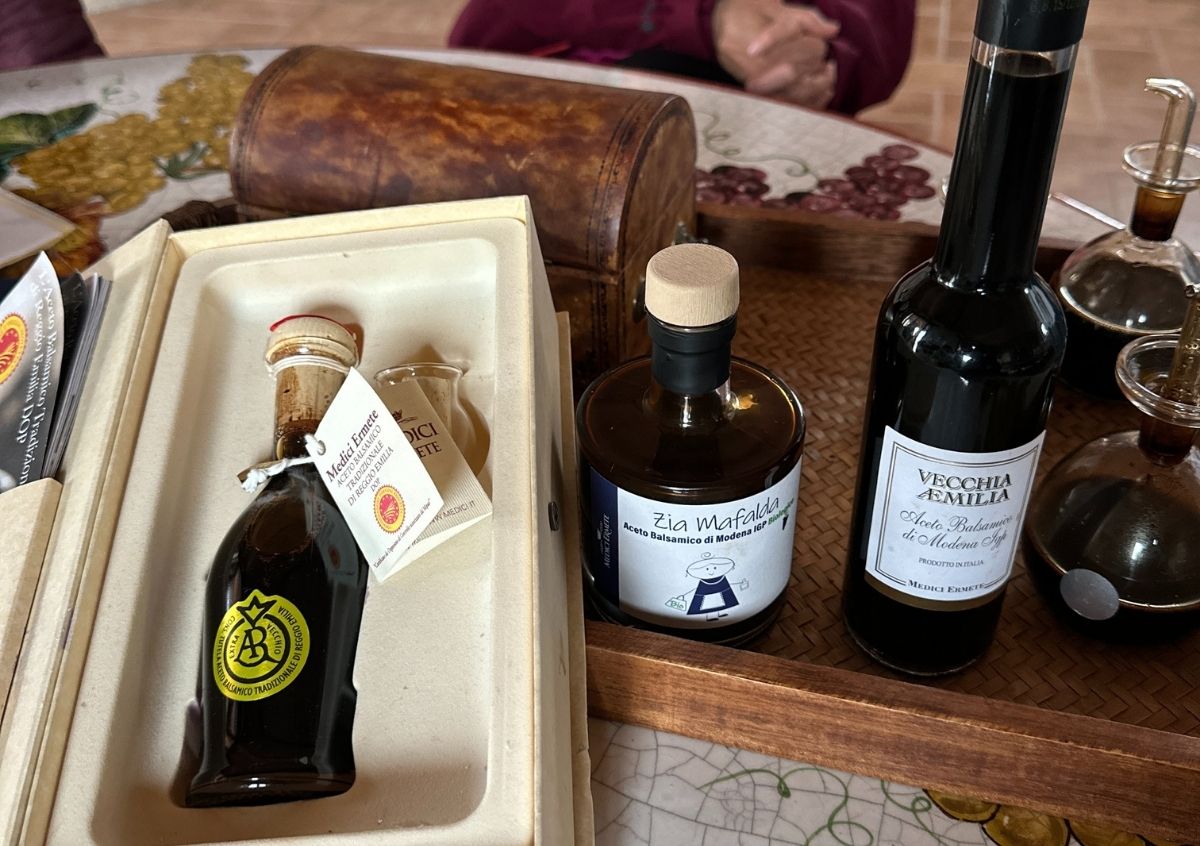
Unlike the mass-market versions, true balsamico starts with cooked grape must, not wine vinegar. Producers slowly concentrate the must, then transfer it through a series of wooden barrels—oak, chestnut, cherry, and mulberry—each lending its own subtle note. Every year, they move a portion down the line, a process that continues for at least 12 years and often much longer. The result is thick, glossy, and complex, with a balance of sweet and tangy that’s impossible to fake.
According to the official Consorzio guidelines, only vinegar aged under these conditions, and within the provinces of Modena and Reggio Emilia, can be called Aceto Balsamico Tradizionale DOP.
The Family Loft
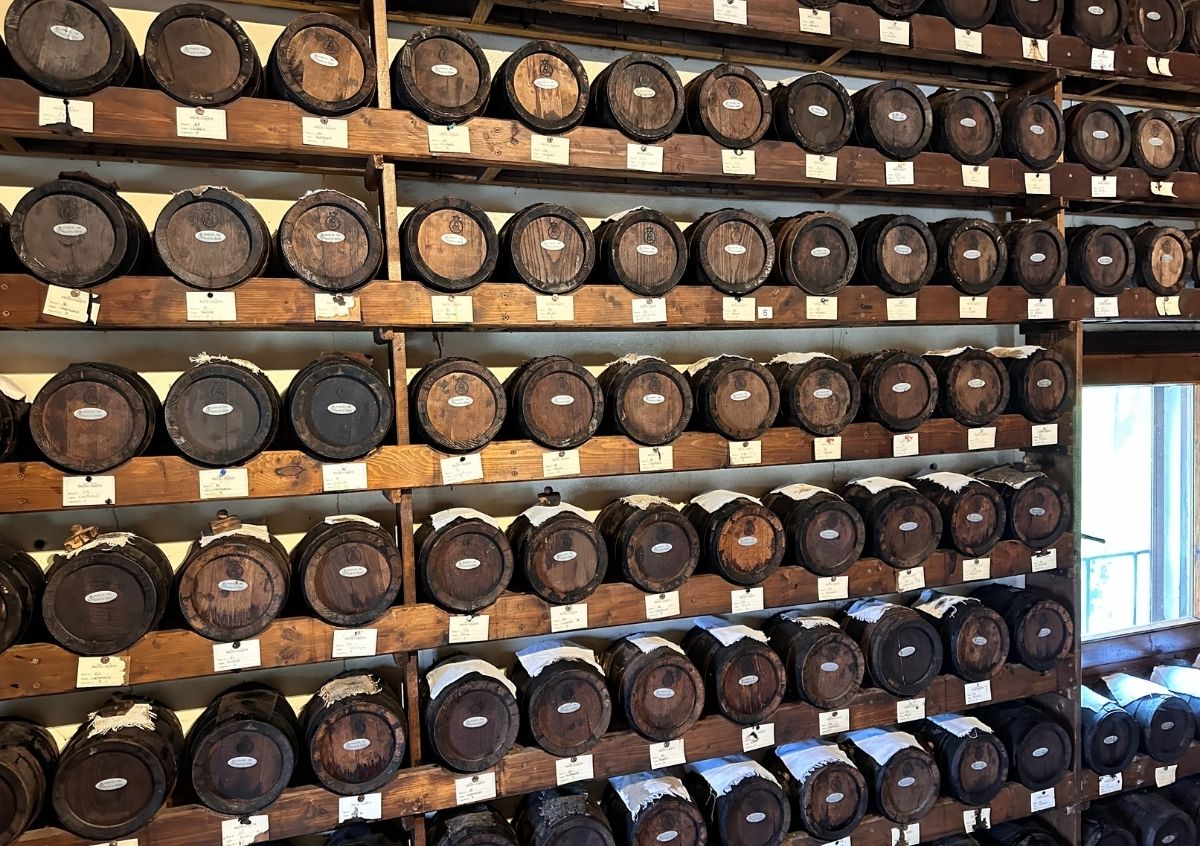
Visiting an acetaia feels almost sacred. Think of it like visiting a private chapel. For many Italian families in this region, it is almost as sacred. Families tend barrels in their homes for generations. In winter, cold air slows fermentation, and in summer, heat drives concentration. As a result, each season leaves its mark on the vinegar. The very architecture of the house, from drafty windows to wooden beams, plays a role. Families treat their barrels like heirlooms, passing them on much as others pass jewelry or land. A long‑standing tradition in the region was to begin a new battery of barrels at the birth of a daughter, with the idea that the vinegar would mature alongside her and one day form part of her dowry.
Walking into a loft, you notice the aroma immediately—deep, sweet, slightly woody. The family arranges barrels in neat rows, some dark with age, others newer. Older vinegar develops more intensity and creates the most prized product.
How to Identify and Taste It
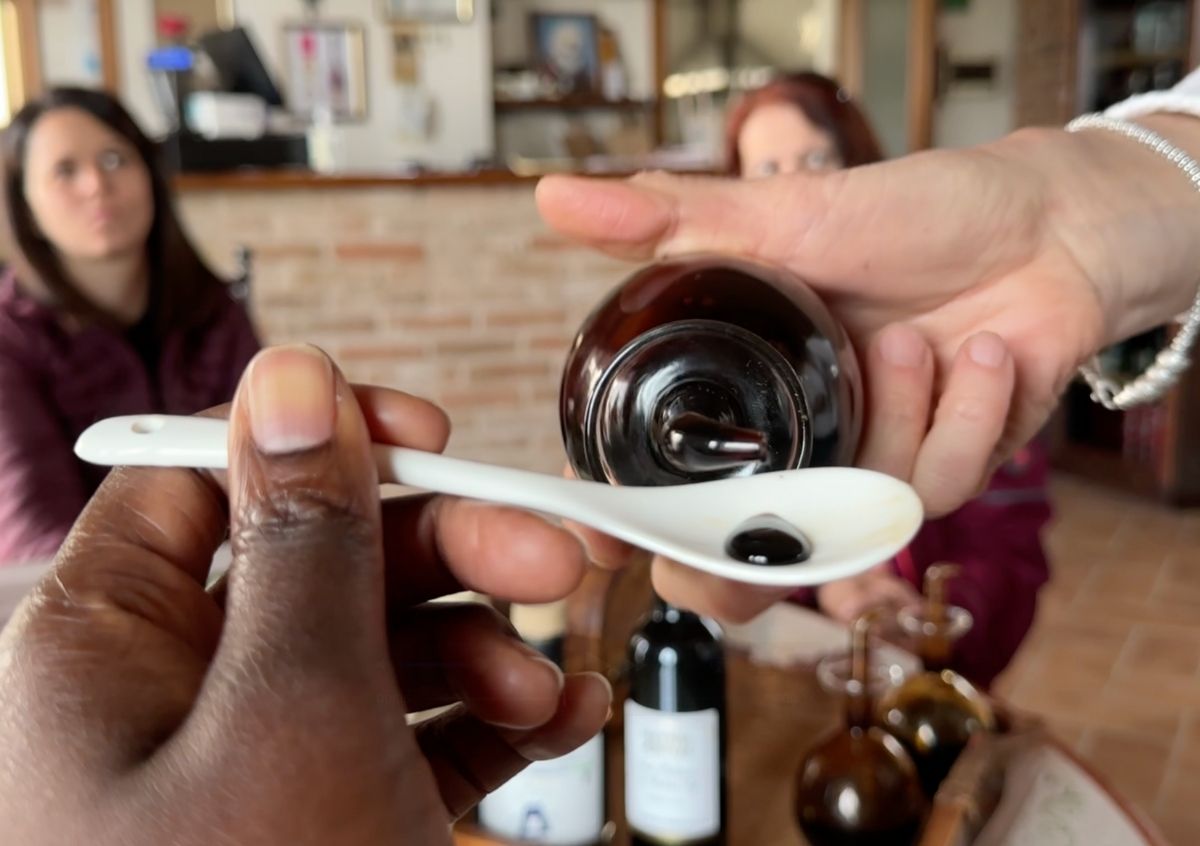
- Texture: Thick, almost syrupy, designed to coat rather than splash.
- Flavor: Rich, layered, with notes of dried fruit, wood, and molasses-like depth balanced by bright acidity.
- Serving: Just a few drops can transform a dish. Think Parmigiano Reggiano cheese shards, fresh strawberries, or even a slice of roast meat.
Why It Matters in Parma
While Modena may be the better-known name on the label, balsamico is very much a part of the broader Emilia-Romagna identity that Parma belongs to. Moreover, this region is unmatched for artisanal products—it’s not only about what you eat, but the patience and devotion behind it. Pairing it with Prosciutto di Parma and Culatello or a glass of Lambrusco makes for a truly unforgettable tasting.
Experiencing It on Tour
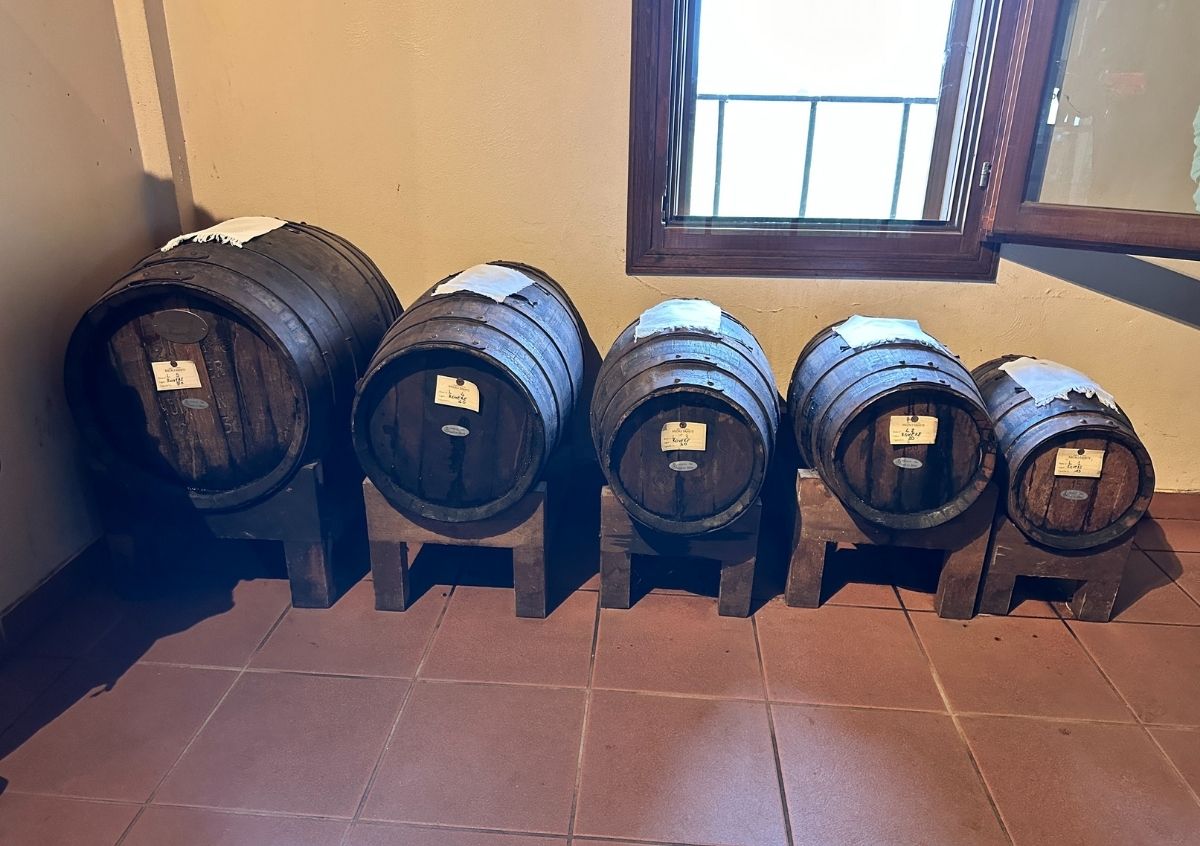
On our Let’s Eat Parma tour, guests visit a relatively small vineyard where both wine and balsamic vinegar are made. Here, vinegar isn’t a major crop but an expression of passion and tradition, produced only in small quantities. Some barrels are reserved for the family, others for sale. The visit is intimate and personal—an experience better lived than described. Afterward, we share a luncheon and taste these precious drops alongside local wines, creating an experience that connects history, tradition, and flavor.