
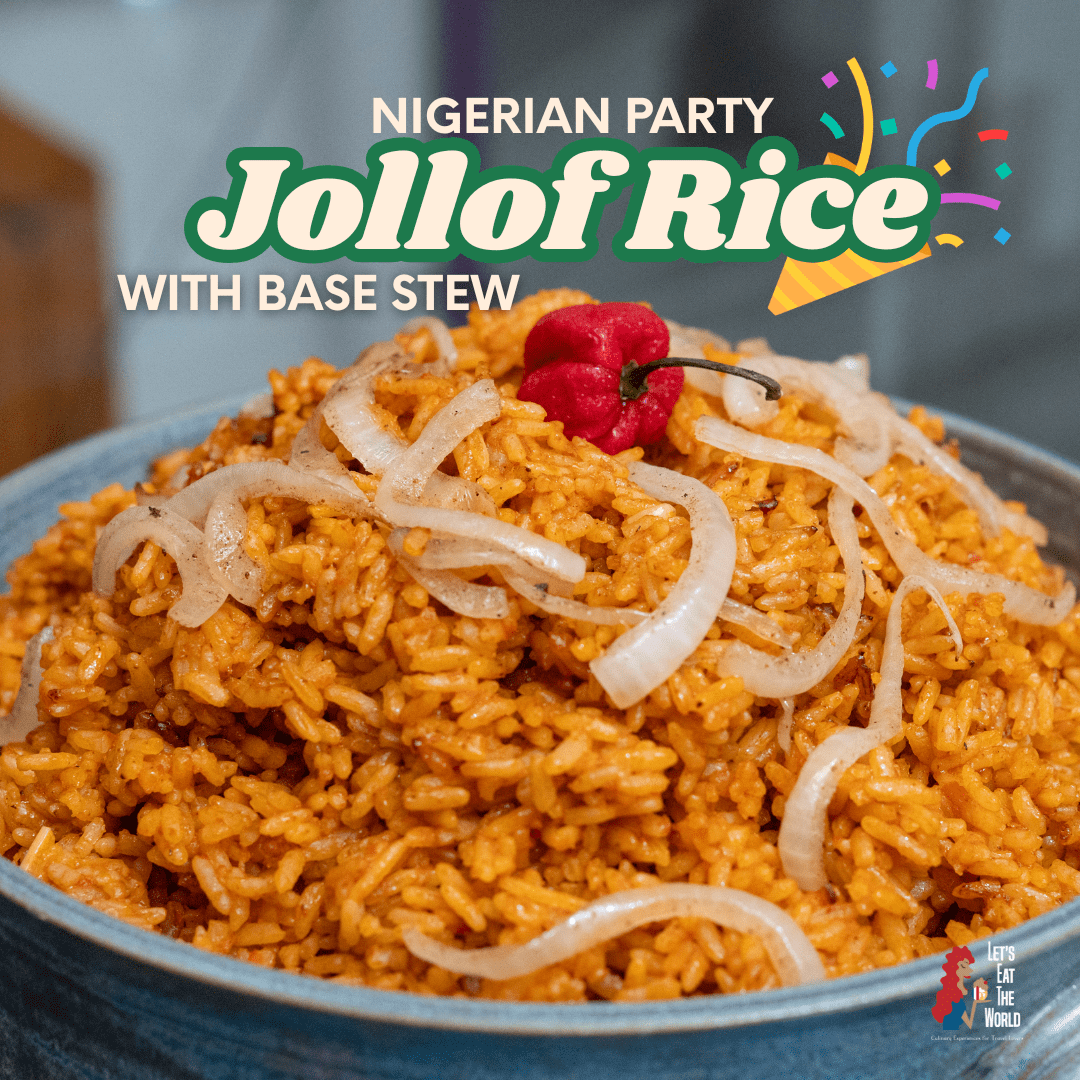
Nigerian Party Jollof Rice
The Ultimate Party Plate: Nigerian Party Jollof Rice
In Nigeria, when the music starts and the guests arrive hungry, one thing always brings the table to life: party-style jollof rice. Cooked over open flame or on high heat to get that signature smoky flavor, this tomato-rich rice dish is a staple at weddings, birthdays, naming ceremonies—any gathering worth dressing up for. But you don’t need a guest list of 200 to enjoy this at home. Our recipe brings the celebration to your kitchen, no matter the occasion!
Many like to debate the origins of this beloved one-pot rice dish, but I think most of us who know better can agree that Jollof rice roots lie deeply in the Wolof Empire of Senegal and The Gambia. Several West African nations to deliver “the best jollof rice”! My Nigerian roots (and family) tell me that Nigeria is far the best, but I’ll let you be the judge. In each country, this jollof rice took on a bold new personality, and its fame has since spread far beyond West Africa. Everywhere has its version, but the Nigerian version, known for its deep red color, caramelized edges, and peppery kick, has earned its place as a crowd favorite. There’s even a name for the slightly burnt layer at the bottom of the pot – bottom pot (think Paella‘s socarrat), and trust us, that’s where the flavor really sticks.
The star of the show in this recipe is tatashe, a type of mild pepper commonly used in Nigerian cooking. It’s prized for its rich color, which adds vibrancy to dishes like Jollof rice, soups, and stews. Unlike regular bell peppers, tatashe has a slightly thinner flesh and a more intense flavor, making it a favorite for creating deeply flavored and brightly colored Nigerian dishes. We highly recommend trying to find it, but if tatashe isn’t available in your area, here are some substitutes:
- Red Bell Peppers – Closest in size, color, and sweetness to tatashe, but they’re milder in flavor, so you may want to pair them with some extra smoked paprika, cayenne, or more scotch bonnet to balance things out. Use 1:1 as you would tatashe.
- Romano Peppers – These have a very similar flavor profile and water content, so they make an excellent replacement. Just make sure to use 2 Romano peppers for every 1 tatashe.
- Pimento Peppers – Rich red color and sweet flavor, along with that signature smokiness that the other substitutes lack.
Ready to bring some West African flavor into your kitchen? This version is easy enough for home cooks and special enough for a crowd. And if cooking regional dishes from around the world sounds like your thing, check out our immersive culinary holidays with Let’s Eat The World, where the menus change with the destination, but the deliciousness never does.
Now, onto the recipe. Tie up your apron and grab your wooden spoon; it’s party time.
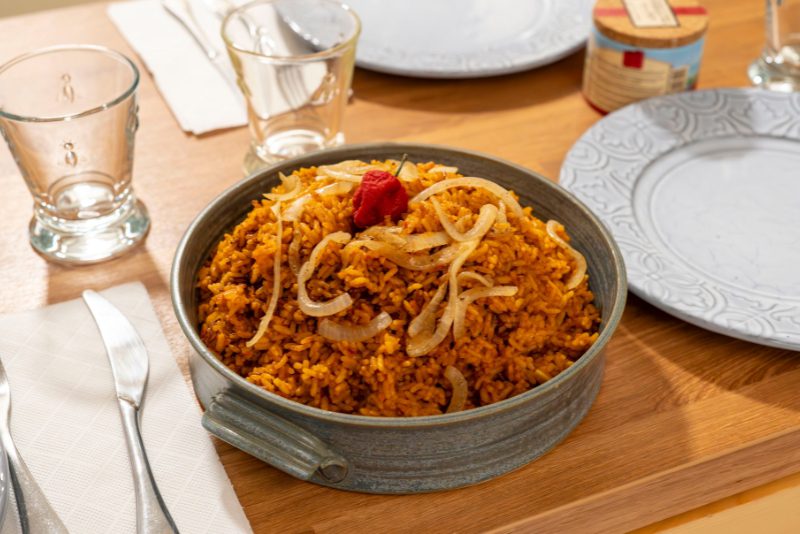
Nigerian Party Jollof Rice with Base Stew
Ingredients
For the Base Nigerian Stew:
- 2 Kilograms Fresh Roma Tomatoes (4.5 pounds)
- 4 Large Tatashe Peppers (or substitute)
- 2 Scotch Bonnet Peppers Ata Rodo adjust to heat preference
- 2 Large Onions 1 sliced, 1 for blending
- 150 Milliliters Vegetable Oil (5 ounces)
- 1 Tablespoon Thyme
- 2 Teaspoons Curry Powder
- 3 Cloves Garlic Minced
- 2 Teaspoons Ground Ginger
- 2 Bay Leaves
- 2 Stock Cubes Maggi or Knorr
- Salt to taste
For the Jollof Rice:
- 1 Kilogram Long-Grain Parboiled Rice (2.25 pounds)
- 500 Milliliters Chicken or Vegetable Stock (17.5 ounces)
- 1 Tablespoon Smoked Paprika Optional, for increased smoky flavor
- 1 Large Onion sliced
- 100 Milliliters Vegetable Oil as needed (3.25 ounces)
- Salt to taste
Instructions
Prepare the Base Nigerian Stew:
- In a blender, combine the tomatoes, bell peppers, Scotch bonnet peppers, and 1 onion. Blend until smooth.
- Pour the blended mixture into a large pot and cook over medium heat for 20–30 minutes, stirring occasionally, until it thickens and the raw tomato smell disappears.
- In another pot, heat vegetable oil over medium heat. Add the sliced onion and sauté until golden. Stir in the minced garlic and ground ginger.
- Add the thickened tomato mixture, thyme, curry powder, bay leaves, stock cubes, and salt. Fry the stew for 20–30 minutes, stirring occasionally, until it darkens and the oil floats to the top. Set aside 2 cups of the stew for other uses.
Prepare the Jollof Rice:
- Rinse the rice under cold water until the water runs clear. Drain.
- Add the chicken or vegetable stock to the pot with the remaining stew. Stir to combine and bring to a boil.
- Stir in the washed rice, ensuring it is fully coated with the stew. Check the amount of liquid in the pot—add a small amount of water if needed, ensuring the liquid level is no more than 1–1.5 cm above the rice. You want the rice to steam rather than boil, so avoid adding too much water. Cover with foil and a tight-fitting lid to trap the steam. Reduce the heat to low and cook for 25–30 minutes, stirring halfway through to prevent burning.
- Check the rice for doneness. If it is still firm, add a splash of water, cover tightly, and steam for another 10 minutes.
Serve:
- Fluff the rice with a fork and garnish with sliced tomatoes, onions, and green peppers if desired. Serve hot.
Notes
- Some people use Basmati rice instead of long grain par-boiled. This is entirely up to you and what you have access to.
- Scotch bonnet is optional, however, authentic Nigerian jollof is known for being spicy.
- Protein Pairing: Serve with fried chicken, goat, grilled fish, or fried plantains for a complete meal.
- The base stew can be made in advance and stored in the refrigerator for up to a week or frozen for a month.
Want to see the world though food?
If recipes like this get you excited to explore more global food traditions, Let’s Eat The World offers culinary holidays where you cook, taste, and travel with local chefs. Georgia, Seville, the South of France, it’s all on the table.